LEADER’S MISSIONS FORECAST 2026
[25 Minute Read]
Dear fellow pursuers of the purposes of God in the world,
Grace and peace to you in the name of the Lord Jesus Christ.

English

Courtesy of Adriaan Adams
Also, at the end of 2025 I ceased my role as Executive Director of the MC and stepped into the new structural reality we have been working towards since January 2025. I write on this side of the transition as Co-Leader of the MC, alongside Co-Leader Dr Ruth Wall (UK). We are joined by an Executive that includes Adriaan Adams (South Africa) and Dr Barnabas Moon (South Korea), with one other to be added in time. Thanks to each of them for their input refining this forecast. In addition, we have a new Steering Committee forming of former and new leaders from the international missions community.
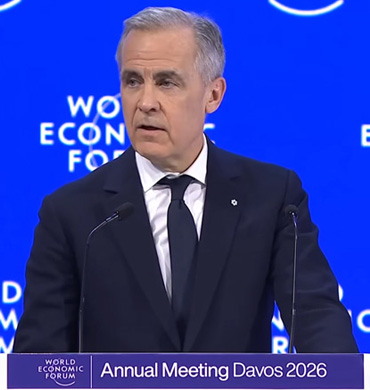
On January 20th, the Canadian Prime Minister made headlines and dominated social media with his speech to the world’s elite gathered in Davos, Switzerland for the World Economic Forum. He declared with serious intent that we are experiencing “a rupture in the world order—the end of a nice story—and the beginning of a brutal reality where geopolitics among the great powers is not subject to any constraints… The rules-based order is fading. The strong do what they can, and the weak suffer what they must.” (A direct quote from Thucydides’ Melian Dialogue.)
My colleague, Janet Epp Buckingham, the Director of the World Evangelical Alliance (WEA) Office in Geneva (engaging with the United Nations) and former Director of Global Advocacy for WEA, noted in a Christian Daily International essay that Prime Minister Carney’s message missed an important mention of human rights. The closest he got was “the weak suffer what they must”.
1. The Corruption of Utility
I understand the political motivation for Prime Minister Carney’s concerns. Without being able to rely on the USA to act fairly as a major trading partner, formerly allied nations must now look to trade deals with alternative partners to ensure their wellbeing. In times of crisis such as we are facing, expedience is bound to trump compassion. Nations do what they must. Sadly, it is likely that nations with fewer scruples will gain the most from such agreements and the suffering of people under such regimes will continue, if not get worse.
We live in a world where “utility” is a major motivator—in political, commercial, and tragically social spheres where we leverage relationships in a transactional way for our own gain (e.g. social capital). Let us not allow it to motivate us in our spiritual lives. Utility is the state of something being considered useful, profitable, or beneficial. In the extreme, it evokes an entirely pragmatic approach to life. If something cannot be used to increase productivity or profit its value is diminished and it is discarded. It is seen as a liability to be rid of as soon as possible to increase net gains.

A purely utilitarian perspective approaches life like a meat grinder
Can you see how damaging such a philosophy is to human lives and the environments that sustain us? Everything becomes material to extract for profitable purpose, or it is destroyed to make more extraction possible. Pro-life supporters will recognise a utilitarian ethic at birth (abortions) and with disability/illness/elderly (euthanasia).
This perspective quickly corrupts our morality, leveraging our pursuit of self-actualisation in a toxic way that destroys our relationships, infecting the way we think about people who are no longer useful to us or seem to be holding us back from our true potential. That’s not to say that we shouldn’t seek personal development or flee harmful relationships, but that we can too easily judge those God brings us into relationship with on the basis of their usefulness to us. “Grist for the mill” (material for profit) or, worse, “meat for the grinder” (to be exploited for profit).
How might the kind of utilitarianism that we are seeing at scale on the geo-political scene be affecting us at an interpersonal and faith level? Is concern for productivity, output, outcome, and impact causing us to treat our brothers and sisters in Christ (or those not yet in the family) as inventory? How much of our strategic thinking is based around gain or growth, however you define that, at the expense of the wellbeing of the people and environments we are connected to? Are you leveraging relationships or counting outputs primarily to sustain or increase income levels? If you are a fund provider, how are you perpetuating depersonalisation? These are serious questions, because the missions community has long been infected with an unhealthy and undisclosed utilitarian commitment.
2. The Antidote of Mutuality
Utility is not inherently bad. We need and must use the stuff of this world and draw from one another. But anyone who has been around me for a little while will know that I insist that we do so with a healthy sense of mutuality. If mutuality is not there we can too easily drift into abuse. A higher ethic, I believe a biblical ethic, is rooted in relational reciprocity — enjoying social mutuality rather than leveraging social capital. We take what we need, yes, but we also give back. We extract (sustainably) and we invest (generously). In other words, we share (freely).
3. The Need of Environments
A terrible example of the lack of reciprocity is being felt in increasing environmental crises. When we extract exhaustively with no consideration of its holistic effects and discard liberally without thought about its impact a bill will eventually come due. Because of the way God created our world to exist in harmonic balance, it’s no wonder the earth is expressing its distress as we lean too heavily on one side of the scales. As Hosea 8:7 (KJV) so eloquently puts it, “For they have sown the wind, and they shall reap the whirlwind.”
Looking ahead 10 years, the World Economic Forum predicts that half of the global risks we will face will be environmental — three of which top the list: extreme weather events, biodiversity loss/ecosystem collapse, and critical changes to Earth’s life-sustaining systems. The other two are natural resource shortages (6th) and pollution (10th).
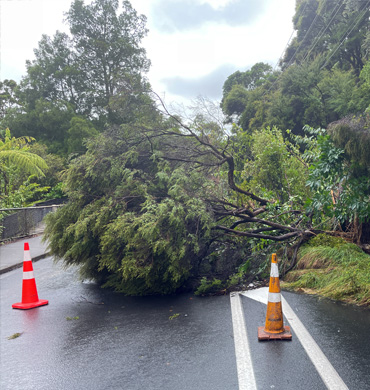
As I write, my own nation has just suffered unprecedented deaths from erosion-related flooding from higher-than-normal rain fall as a result of warmer oceans. Similarly in Scotland, parts of Europe, southern Africa, and some of South America; and the USA is experiencing extreme winter weather and record snowfalls. That’s just a few examples in the first few weeks of 2026!
We need to pay better attention to the creation that groans awaiting the children of God to be “revealed” — but surely that has already happened. Here we are, already God’s children (1 John 3:2), even as we await full transformation into the likeness of Christ. Is not the environment around you part of God’s good creation? Romans 8 suggests that we have a responsibility here and now to care for it, restoring it even; a responsibility that many Evangelicals have not yet taken seriously.
Yes, by all means, God wants many more people flooding into our family of faith from their sin-influenced darkness to Jesus’ light — but it is a light that envelopes a glorious creation already longing to receive and work with us all for reciprocal benefit. Both people and places are integral to the purposes of God for all creation.
4. The Promise of Positive Growth
As challenging as it has been for many people and places over the past 12 months, we have heard celebrations about people, especially younger people, finding God’s embrace in greater numbers where churches have struggled with decline for decades.
I’m primarily referencing the UK, but there are some indications that parts of Europe are following similarly. Jan Wessels (Co-General Secretary for the European Evangelical Alliance and an MC Steering Committee member) believes that there is much hope yet for Europe. Yet, he warns, “there is a war raging in Europe—not only with weapons, but with ideas, narratives, and power”.
In the UK, they have noticed a “quiet revival” with reliable research showing a definite uptick in commitment to Christianity. We hope commitment to Jesus grows with that commitment to Christianity (they can be two different things). The Belief in Britain report, Bible sales statistics, Students & the Bible survey, the Bible Society study, Youth for Christ’s Z-A report, the UK Evangelical Alliance’s Finding Jesus research, and the Passion for Life national survey all indicate a very receptive spiritual environment in the UK at the moment. Prominent personalities becoming Christian in recent years, connected with the UK’s Christian heritage, no doubt amplify this effect.
The UK Evangelical Alliance has published a great article by Phil Knox about how best to maximise this openness with effective outreach. The principles Phil highlights are excellent for any context. Take a close look, it is well worth learning from.

In contrast, the USA shows no indication of a similar trend. The Pew Research Center reports that “…our recent polls, along with other high-quality surveys we have analysed, show no clear evidence that this kind of nationwide religious resurgence is underway.”
Nevertheless, in a recent Substack essay, Ted Esler (President, Missio Nexus USA) was pleased to see the response of young people at the Urbana Conference in December 2025, with the conference’s thrust returning to a more traditional outreach focus. Perhaps the crises US Americans are currently facing will be a catalyst for a (re)turning to a biblical faith for many.
5. The Benefits of an Illusion
Between recent international decisions and declarations by President Trump and the impact that is having on other nations, we are right to be alarmed. As Prime Minister Carney noted, the illusion of peace that was promoted by international agreement following World War II and accelerated in the ‘90s after the collapse of the USSR has been exposed for the confidence game it was. The neo-liberal belief that free trade and multinational corporate collaboration with state actors would ensure mutual prosperity with trickle down effects was always a pipe dream.
There were undoubtedly benefits to some. Industrialists and tech barons (including weapons producers) benefitted wildly from open trade and access to locations for cheaper production (read: human rights abusers), and the data shows that much poverty had actually been alleviated, but the gap between the rich and poor widened massively in the process. The illusion of global economic stability was never going to hold. Followers of Jesus can say that with certainty because neo-liberalism doesn’t deal with the sin issue. People will be people, and powerful people will ultimately get frustrated and throw off restraint— and removing restraint is exactly what is happening, as I’ll explore below with reference to the plight of persecuted Christians.
Nevertheless, the confidence to open borders more freely was also a blessing for international missionary activity—both for those who went and those who received international students and migrants. But that 30-year bubble has burst. First with the global pandemic and now with increased nationalisms, hard-line anti-immigration policies, and the abrupt return of tariff wars.
6. The End of the NGO Era
Missionary activity also benefitted greatly from the post-WWII desire for development that lubricated neo-liberal economic theory. Developing nations were called that because they desired the benefits of industrialisation. This was especially so following the end of the Cold War.
The 1990s was the era of the NGO (Non-Governmental Organisation) boom. NGOs quickly became important global political influencers, and faith-based NGOs rode that wave well, providing missionary access to many nations and bright witness to Jesus in some of the toughest places. However, after the Global Economic Crisis (into the 2010s), NGOs began to fall out of favour, became mired in controversies, and state governments leapt on the opportunity to take power back from the NGOs to whom they had previously outsourced services. This happened synchronous with the rise of nationalism and increasingly autocratic government practice.
The NGO era effectively ended in August 2025 with the United States withdrawing its support of the U.S. Agency for International Development (USAID). That decision sent shock waves around the world. NGOs will close in rapid succession as funding dries up and state actors take control of what used to be independent philanthropic generosity to vulnerable populations. This is not only a USA phenomenon though. Development budgets were decreasing in Europe as well. Germany is the world’s second-largest donor to foreign aid, and it has made steep cuts, as has Norway, Sweden, the UK since 2020 and France in 2024, with Netherlands likely to follow. In light of the unstable geo-political climate, development funding is being redirected into various types of defence funding. Which should further amplify the clarion call for us to prepare for some major coming conflict.
With reference to NGO funding from non-government foundations and philanthropists, a free article in Foreign Affairs (August 2025) noted, “Given the current global financial uncertainty, however, it is a difficult time for philanthropies and other private donors to make major investments.” What might this mean, if anything, for missionary grant funding from Christian foundations? With governments taking more control of their funding and directing it toward their felt needs, I suspect similar principles will drive large faith-based foundations. The question becomes, what are the new felt needs?
The demise of NGOs was fuelled by undermined confidence in NGOs’ ability to deliver results effectively on the ground and corruption within the system. Trust was broken. But it is not simply a matter of increasing accountability to regain it. The entire paradigm has shattered. Direct control by the funders has replaced out-sourcing and delegation. Utilitarianism demands bang for buck, and governments are now back in charge of expenditure. Will Christian foundations demand more hands-on control of how their funds are used, by whom, and for what outcomes? Who (or what) will inform them how best to apply their charitable resources? Philanthropic vision is heavily influenced by popular thinking, and that should concern us.
7. The Trauma of Tribalism
We are in for a very uncomfortable few years. The fact that new geo-political alliances are going to be made was evident in Prime Minister Carney’s speech. Ally and axis partnerships are being reformed. Once the lines are drawn, those of us who live in multi-cultural Western contexts may see something like a reflection of what has been happening in Minnesota recurring in our nations. As it was in World War II.
Our neighbours who happen to share ethnicity with a nation on the other side of the emerging conflict are likely to be terribly treated. Will church leaders, church goers, other ministers and missionaries act in defence of them as many believers are doing in Minnesota against the excessive use of force against migrants? Or will we embrace renewed nationalism and vilify those who are not like us? Time will tell, but at the moment we do well to learn from what is happening in America and prepare ourselves with a robust theology of support for the marginalised and mistreated because that could well be a fast-track to the “revival” that many are praying for.
Instability amplifies our sense of need for something transcendent to give us hope while we ride out times of trial and tribulation. This experience has potential to be like a freeway leading people straight to Jesus. True Christianity is not escapism. Hope in the midst of suffering is central to our beliefs, but it doesn’t end with suffering. Renewal (resurrection) awaits… for those who hold fast to the faith and overcome (see Jesus’ letters to the churches of Revelation). This is the message we take into the world and it’s as if the Spirit is preparing the world afresh to receive it.
This seems to be happening quietly in the UK, perhaps in preparation for hardship to come. It can be detected in the massive wave of Iranians coming to Christ over the past decade, preparing them for the existential trials they are facing right now within the nation. Along with numerous other examples of believers holding fast in conflict zones around the world, many of whom are encouraged by dreams and other supernatural encounters with Jesus as the Holy Spirit illuminates the darkness in multiple places.
If open media coverage was as prevalent in other regions as it is in the West, we could learn much more from our persecuted brothers and sisters about how our faith can support us in times of uncertainty, trial, or outright conflict, when we are faced with rising tides of xenophobic tribalism.
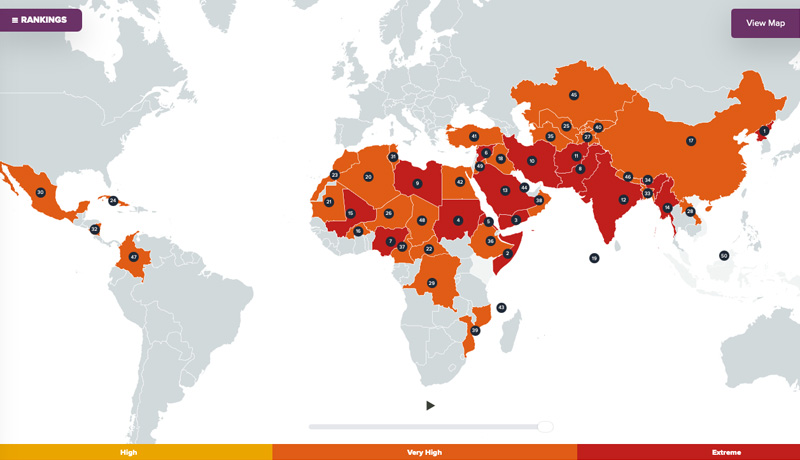
According to the latest World Watch List from Open Doors, the number of faithful followers of Jesus living in hostile contexts right now is a staggering 388 million. That’s an increase of 8 million on the previous years’ tally, and it continues to trend upwards. Believers in Syria and Sub-Saharan Africa have experienced significant spikes in persecution (according to Open Doors’ criteria), indicating that restraint is lifting even further, releasing extremist Islam and organized crime to act more freely against Christian minorities.
These are contexts where the church is typically fragile, and believers few (relative to the population), but also where faith grows strong, with movements emerging. Which gives rise to another issue brought to our attention afresh over the past 12 months.
8. The Lack of Theological Education
We have a leadership training crisis in the global Church, especially out on the rapidly growing edges, among those without strong international denomination support. It is largely because catechism (or “discipleship” if you prefer) is ineffective, with limited access to reliable resources, that heresy is able to spread, leading naïve followers of Jesus astray. Even that which is readily available (for example on the internet) is causing problems by espousing extreme versions of doctrinal perspectives that either split or bind congregations in legalistic teaching from narrow interpretations of scripture.
At the WEA General Assembly, we were informed that an estimated 3.7 million pastors are needed globally. There are 4.7 million congregations globally, according to the 2026 Status of Global Christianity. Apparently only 5% of pastors have any formal theological training.
Furthermore, nations like Rwanda have been demanding for some time that pastors have some form of theological education (preferably a bachelor’s degree) in order to register their ministry. This has created a huge need for accredited theological education where formal training is not easily accessible. A type of non-formal training method is required. In close relationship with WEA, the ICETE Academy (from the International Council for Evangelical Theological Education) now exists to help provide biblically faithful theological training for Christian leaders wherever it is needed.
With demand increasing in places where the church is growing, the irony is that formal theological educational institutions in the West are struggling to survive. The closure of Spurgeon’s College in the UK last year was a worrying sign, as was the amalgamation of TEDS in Illinois to Trinity Western University in British Columbia, ending the contribution of TEDS (as an independent institution) to global missions.
But missionary training in the West has been under stress for some time as a specialist focus within higher theological education. In 2021 Fuller Seminary folded its school of intercultural studies in with theology (but resurrected “mission” in the new name), Biola followed a couple of years later with the closure of the Cook School of Intercultural Studies (to focus on Talbot), Gordon Conwell has discontinued its MA in intercultural studies, as has Fresno Pacific, just to name a few. In the UK declining numbers of students has led to All Nations Christian College to announce their intention to relocate, largely to take pressure off the budget. At the same time the call for missionary training in the Global South and East is being clearly heard.
It seems the sources of theological education supply are not able to be sustained, and it has proven too challenging for many to shift supply to where the demand is greatest.

Along with many other academic institutions, it is clear that in theological education, and by extension missionary training, another paradigm shift is happening. How is the global missions community preparing for and adapting to this shift? In addition to the needs of local pastors, how are we training field missionaries (whether local or foreign)? Furthermore, what are we training them for?
9. The Power of the Majority on the Move
If there was any doubt, the theological education supply/demand conundrum indicates that Christianity has well and truly shifted “South” (to the Majority World). The 2026 Status of Global Christianity puts the current percentage of Christians in the Global South at 69%. With multiplying growth continuing in what were once considered mission fields, they predict 82% of Christians will live there by 2075.
These do not represent followers of Jesus we need to mobilise. They are not a “missions force” as we might traditionally understand missions. They are not units for us to convince to move from everywhere to anywhere. Can you see how easy it is to think in utilitarian terms within an old paradigm of missions?
No, they are people already living their faith out loud where the Spirit of God has placed them, the statistics of growth in the Majority World, and the evidence we see from research into people movements, cement this as fact. They are not a force for institutional missions to harness; they are a wildfire directed by the Spirit of God. And if the Spirit of God leads them to leave their place of origin, they don’t require our institutional assistance to do that.
While forced displacement is terrifying and its trauma should not be lessened, followers of Jesus can move with hope that there may be a redemptive purpose in it however dim that hope may be in the moment. We do not know the end of the story. Even as we see immigration police forcibly moving people on yet again, it may turn out for good. That’s not to say that we should support the decisions of the powers that be or affirm atrocities in their name, but Christian history is full of the gospel being transferred via the most horrific of circumstances. Few of our traditional missionary societies are equipped to provide assistance in such circumstances. It requires a new kind of vision to aid believers from the Majority World who are on the move — pushed by circumstance but led by the Spirit.
10. The Future of Missions
And so, we come to the question, what even is the role of the foreign missionary in light of all the challenges and changes we are experiencing? Before answering that question, we first need to agree on our fundamental cause: people still need the gospel, and the need is greatest where access to the gospel is least. Putting debates about the gospel aside, the fact of the matter is that there remain places and people in the world who know nothing about the light that Jesus offers. They have seen no evidence of the Kingdom of God. They have no comprehension of what God’s shalom New Creation looks like. Some servant of Christ needs to go live there.
Thankfully, the growing edge of the Kingdom is spreading ever closer to these places with believers from a near culture or a Christian migrant able to cross the boundary to share with them. There is something of an organic flow to this as the Spirit leads and guides, as movements… move. Disillusionment from oppressive regimes and frustration from failed promises in other faiths open up new soil for the gospel seed to be planted, grow, and flourish with appropriate nutrients.
Again, to the question, what role do outsiders have in this reality? How do foreigners participate in this paradigm? I believe it is in the realm of sensitive support. Outsiders have much skill, talent, giftedness, and education that can be of service to the gospel in new territory. It just needs to be offered with intercultural sensitivity, not thrust upon people as if it’s non-negotiable. As just one example among many innovations that supports local ministry among people with little access to the gospel, see this introduction to smartphone film making.
As I noted in my address to the WEA General Assembly in Seoul, 27 October, 2025, we should be working “to see local outreach and disciple-making flourishing, together with global partners nourishing — the Majority World and the West coming together in co-creating God’s New Creation where the gospel is least represented and churches are few.” Locally-led flourishing with global nourishing from outsider support. And, according to both trustworthy statistics and anecdotal evidence, today that nourishing is most likely to come from those who have travelled from the Majority World.
For example, cross cultural missionaries can advocate and help resource. They can equip and train, but I’m not convinced “lead” or “consult” is an appropriate posture as that suggests a top/down relationship. We should go as co-learners, modelling mutuality in the learning process. Furthermore, the training offered should allow for the trainees to develop their own way of applying the information that is passed on, to create their own systems suitable for their contexts based on principles from scripture and examples from around the world.
As co-learners we can share our experience of God from our contexts with others to inspire them to develop meaning from their experience of God in their contexts emerging out of their reading of scripture—from which we can learn something anew. We can also explore with them what we are learning as our contexts are changing, to help them adapt to the new realities they are facing or soon will face.
This is a strong aspiration for the MC. We aim to provide a space for sharing of learning, where we lean in, listen, and learn from and with one another.

11. The Challenge of Tech
For example, outsider specialists can help locals better navigate the rapid emergence of Generative Artificial Intelligence (that create answers and outputs), soon to be eclipsed by Agentic AI (that determine decisions and actions). AI could easily shift from being the tool to being rule. The assistant becomes the manager. If/when neural network AI eventually emerges and develops into Artificial General Intelligence, well… have you seen The Terminator movies? Maranatha, come Lord Jesus.
Suffice it to say, we needed to have developed and adopted our theology of digital realms before the global pandemic. Thankfully, Christian think tanks are working on this for us and are recommending a middle path between fearful rejection and uncritical adoption. An ethical framework presented at the WEA General Assembly is called T.R.U.S.T — Theological Alignment, Relational Impact, Utility and Justice, Sustainability, and Transparency. The objective is to ensure that technology enhances rather than replaces human relationships.
Relationship connection is, after all, essential for gospel transmission and healthy faith formation, even in cyberspace. As the internet has opened information superhighways into almost all parts of the world, digital outreach with real-world hope must be a priority. Thankfully, there are some outstanding cyber-pioneers doing some great ministry and influencing huge numbers of people online, but they also do not fit traditional missions models and agency constraints may end up hindering their effectiveness. This is yet another indicator of a significant paradigm shift that the missionary community has yet to catch up with.
Conclusion
While this forecast may seem rather negative and potentially overwhelming, we must remember that God is not surprised by any of it. We must perceive the Spirit moving in the world to undermine and redeem what the enemy is stirring up. Remember, we do not wrestle against flesh and blood — political, social, or religious actors — but against unseen principalities and powers corrupting systems that were intended for good; evil influences that stand against the purposes of God. Yet we know the purposes of God will always prevail. Christ will have the victory and he invites us along for the ride — as co-creators of his New Creation.

Let’s celebrate the increase of those coming to know Jesus in some contexts and commit to helping make that possible in others. That may mean releasing resources that we have access to into situations of dire physical need as governments redirect funding in national self-interest.
Let’s not let the poverty alleviation gains slip away because of an unhelpful focus on spiritual benefits alone. That we are embodied and live in families and communities, designed for healthy mutual intimacy, is an eternal fact that will be experienced in full with resurrected bodies in the New Creation. Our gospel needs to both declare and demonstrate that hope.
The greatest threat to our demonstration of the gospel is tribalism. Jesus died to pull down such barriers (Ephesians 2:14-17) and there is no greater demonstration of the power of the gospel than former enemies becoming family and loving one another in Christ. While the Spirit of God enables us to reconcile, we also need to be taught how and why it’s necessary. Scripture can reveal much from a plain reading, but we have a great deal more to learn about handling the word of truth wisely from theological education. Providing it is absolutely necessary for the wellbeing of biblically faithful Christianity worldwide. Especially for God’s people on the move, whether missionaries, migrants, refugees, or diaspora, with the opportunity to be God’s agents wherever they move or are moved to.
In all this, what has classically been known as missions (the 230-year-old Evangelical model) is undergoing a radical transformation. The future is uncertain, but what is certain is our need to adapt sooner rather than later. Traditional missions wineskins are unlikely to contain the new wine of gospel activity. As with academic institutions, many of our traditional mission societies are likely to close or amalgamate into those who are doing the necessary work to adapt. I believe new wineskins are needed, more supple and flexible, that allow the new wine to mature. They are already emerging, especially in the Majority World and by a younger generation where necessity (and opportunity) continues to be the mother of invention.
That being said, there are still many ways for foreigners to participate cross-culturally and/or across cyberspace. Not many may understand AI yet, but everyone has gifts to offer the expansion of the global Church. Conversely, local churches also need global perspectives as they refine their responsibility to participate in Christ’s global body — serving it with mutuality and helping to expand it, in the contexts of deep, committed relationships with authentic humility.
Pray
- Pray for the peace of Christ that surpasses all understanding for all Christian leaders around the world in these volatile times—and that we will all learn to lean not on our own understanding but commit our path to God—so that Christ’s peace will guard our hearts and minds.
- Similarly, pray for wisdom to know how to make the best decisions for those under our care and within our responsibility. We cannot hope to decide for those we are not immediately responsible for but we are accountable for those we lead.
- Sometimes urgency requires that we focus on the needs in front of us. Let us not forget that we are part of a global Church and pray for those suffering in other places. May the Lord graciously grant much perseverence.
- Pray for sensitivity to fellow believers whose experience of God differs from ours in expression, yet remains true to Jesus’ teaching and is biblically faithful—especially when they move into our neighbourhoods as migrants.
- Pray that we will keep our eyes firmly fixed on God, the giver of all good things and our provider, rather than human or centralised (governmental) sources of wealth. Even so, pray too that those blessed with wealth will see it liberally shared to assist with the witness to and extension of God’s kingdom.
- Pray for the health of all cross-cultural or cross-boundary partnerships. That we will all learn to co-create well with each other and remain sensitive to our own limitations—committing to perpetual reconcilitation in all our relationships.
- Dare to pray for a renewed conscience regarding your relationship with your habitats, the environment around you. Ask the Holy Spirit to show you how best to live well upon the land and to nurture your surroundings and everything that lives in it.
Follow
Click here for Jamie’s personal blog. Jamie can also be followed on Facebook here.